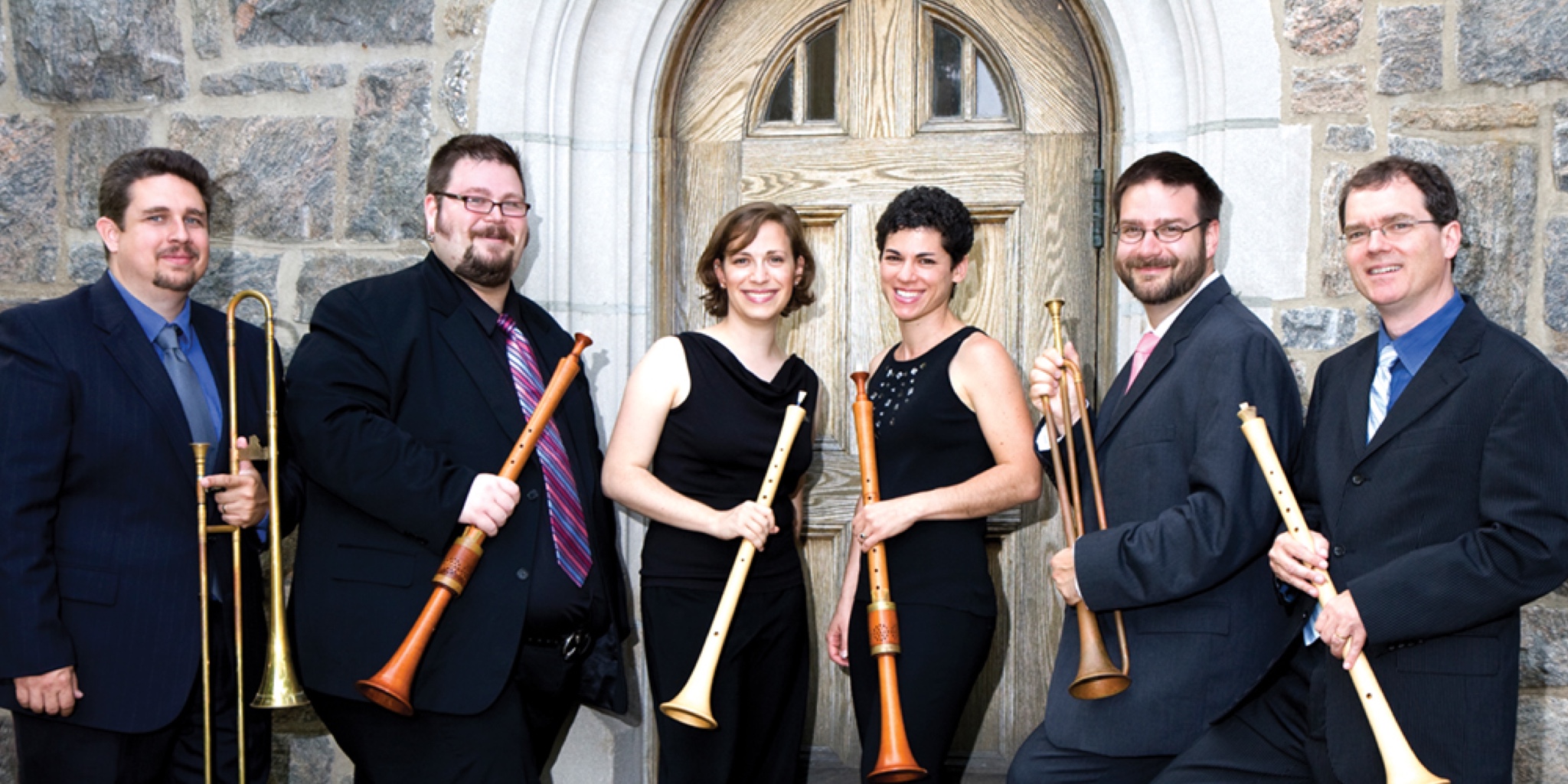

This is a reposted article originally written for Positive Feedback by Rush Paul. The great team at Positive Feedback, as well as Rush himself, have kindly given us permission to repost this and you can find the original article at the link below.
Thanks to Rush and the PF team!
Yarlung Records continues to celebrate its Twentieth Anniversary with another superb release from its analog master tape archives. In April 2025, we received the marvelous recording by David Fung, Evening Conversations, about which I wrote HERE. Now we have another release from Yarlung’s archives that has only seen light of day as a CD: Ciaramella’s Music from the Court of Burgundy. You should also be aware of another Yarlung album by this same ensemble, Ciaramella Dances, which I’ll discuss further below. Both albums are released in Pure DSD256. Both are pure delight.
![EXCLUSIVE EARLY RELEASE for MEMBERS | From The Court Of Burgundy: Yarlung’s 20th Anniversary Edition [Pure DSD]](https://media.cdnb.nativedsd.com/storage/nativedsd.com/wp-content/uploads/2026/03/02112340/YAR8919920DSD-190x190.jpg "YAR8919920DSD")
Music from the Court of Burgundy, Ciaramella. Yarlung Records 2008 2025 (Pure DSD256) Edit Master Sourced
Ciaramella, the Los Angeles area based early music ensemble, is a world class ensemble. Directed by Adam Knight Gilbert & Rotem Gilbert, they play music from over 500 years ago. For them, none of this 200-300 year old modern stuff. No, they play the real thing that graced the Medieval and Renaissance courts and countryside of the 14th and 15th centuries. This is the world of shawms, recorders, sackbuts, slide trumpets, and bagpipes. It is a world of music I have loved since I first encountered it on recordings some 50 years ago. To find it so well presented by Ciaramella is a treasure—they are a treasure.
In this album, Ciaramella have chosen music with the rich diversity of the court of the Duke of Burgundy circa 1500. As prevalent in that society, the music here is both transcendent and bawdy, refined elegance and rowdy dissonance. From it’s core in the French wine country of Burgundy, the fifteenth-century Valois Dukes of Burgundy forged a kingdom that expanded to dominate much of the Low Countries, including modern Belgium, Holland, and parts of Northern France. One of the major powers of 15th century Europe, theirs was an international court, a court of great wealth, sophistication and art.
And the music of this period is as complex, as layered in meaning and double-entendre, as any we’ve known. Ciaramella director Adam Knight Gilbert writes in the liner notes, “From the late fourteenth century, the Burgundian regions fostered generations of makers and players of music who traveled and worked across Europe, profoundly transforming musical culture. Their surviving repertory reveals traditions of borrowing, allusion, and emulation that transcended national borders and influenced European music for centuries.”
All the instruments used in this recording are copied from original instruments still extant, or recreated from historical paintings or treatises. This allows for the texture, tonal complexity, and harmonic overtones that are distinctly different from the modern instruments descended from those in use here.
With instruments tuned at A=466 Hz, and with sonorities so different from those to which most listeners are attuned, the music can sound coarse, raspy, grating. But for ears attuned to the sounds of shawm versus oboe, medieval recorder versus Baroque recorder, slide trumpet versus trombone, bagpipe versus organ, this music is an entry into another world filled with texture, grace, and innovation. And when played by musicians of this high caliber, there is much sly innuendo to be found in the multiple layers of sound and counterpoint.
The entire album is delightfully arranged and performed over a diverse set of music. From the graceful, classic dance La Spagna by Josquin des Prez to the sophistication of Gilles Binchois’ Comme Femme Desconfortee (performed without words), to the rambunctious Rostiboli gioioso filled with trumpet and drums, this album brings me joy. And the occasional improvisations (as in Gilbert’s La Spagna with improvisation) are the cherry on top that make the recital fresh and alive.
The superb sonics of the recording add immeasurably to my enjoyment of this album. Using a single AKG stereo microphone with, as Bob Attiyeh describes it, “a signal path as short as we could make it, with as few electronics between performer and final product as we could manage,” the captured sound is transparent, open, and richly detailed. And the lovely acoustics of Alfred Newman Hall at the University of Southern California make this possible. Bob says, “Newman Hall exemplifies the warm and yet transparent and lively sound of the concerts halls that I favor for recordings…” All captured directly to 2-track 15ips analog tape and now transferred directly to DSD256 without any PCM in the mix. It is this attention to detail (and fine sensibilities) that make the recordings from Yarlung Records so very special in my experience. I consistently place their releases at the top of my list of outstanding recordings, and this Ciaramella recording belongs among the best of their catalog.
Back in my days with vinyl, I never had Ciaramella’s Music from the Court of Burgundy in my music collection because it was only issued on CD. And CD was not in my lexicon when I was focused vinyl. I did, however, have the wonderful earlier release of Ciaramella Dances (see below) on 45rpm vinyl, and that album completely me sold on Ciaramella. Now that Bob Attiyeh is releasing on DSD256 some of the recordings never released on vinyl nor in high resolution digital, I could not be happier. This is a wonderful day for both music lovers and audiophiles.
And I definitely know this album is a good’un when I walk into Ann’s office and she has her headphones on, eyes closed, head bobbing to the music she’s playing on her office system—I can see the cover for Music from the Court of Burgundy displayed on her computer screen. She is definitely not to be disturbed!
Most enthusiastically recommended.
Free Sample Download — Compare the same track in Pure DSD256 from the master tape versus the originally released CD version
How far have we traveled, sonically, from the 44.1kHz 16-bit file on the CD to a Pure DSD256 transfer directly from the 15ips master tape? Listen for yourself on your own system after you download the free comparison tracks Bob Attiyeh has so graciously agreed to let us offer to Positive Feedback readers. A DAC capable of playing bit-perfect DSD256 without modification is needed for this. The download is of Track 14, “Rostiboli gioioso,” Music from the Burgundy Court by Ciaramella.
Click here to download the comparison tracks, Pure DSD256 vs CD [Download Link Coming Soon]
What do I hear in this file comparison? In my system, the PCM 44.1 file has a sharpness and immediacy that is initially attractive, but wearing. The DSD256 file, while initially sounding a bit duller and less exciting, ultimately sounds more like real instruments. This is apparent when the horns (slide trumpet and sackbut) come in around 0:30 — at this point, the difference in quality of instrumental timbre is immediately noticeable. And, the DSD256 overall has more air and texture. I hear more of the hall and more of instruments playing in a natural acoustic space than on the 44.1 file.