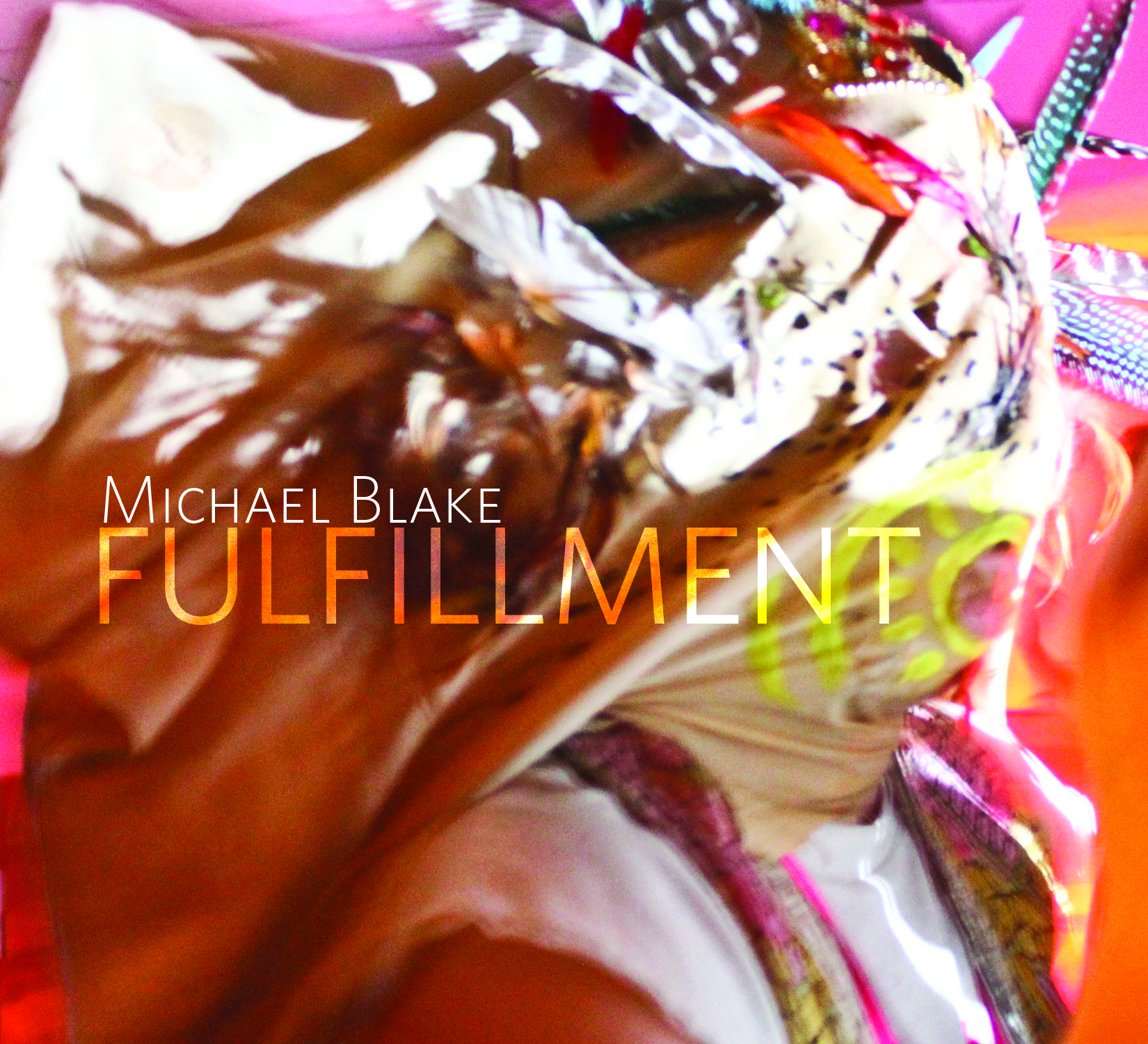
Exclusive to NativeDSD, this Unmastered Edition presents the music’s dynamics, complex textures and diverse timbres in their truest light
New York saxophonist Michael Blake returned to his hometown Vancouver in 2015 to create Fulfillment, this ambitious suite, his most conceptual work since his debut as leader, Kingdom of Champa (1997), his jazz portrait of Vietnam. This time the connection is, more indirectly, with India. Originally titled The Komagata Maru Blues, this project was inspired by a tragic immigration incident in Vancouver in 1914, when a Japanese freighter carrying several hundred East Indian immigrants (almost all Sikh) was turned away using exclusionist, racists laws. Michael has a family connection to this history through his great grand uncle H.H. Stevens, a Conservative Member of Parliament who declared at the time, “I intend to stand up absolutely on all occasions on this one great principle – of a white country and a white British Columbia.”
Blake never knew Stevens, and grew up in a progressive environment. But the connection catalyzed a creative process, one which was also affected by the Syrian war: “I didn’t want the center of the work to be about the failure of it all, rather I wanted to tell the story from several different perspectives and show how far we’ve come….The biggest departure for me was writing lyrics. Most people have never heard of the KM and probably never will. So I think the lyrics broaden the scope of the music into what listeners can imagine for themselves. For me ‘The Ballad of Gurdit Singh’ captures that moment in Vancouver harbor when the passengers are not welcomed with open arms.”
The suite begins with a major blues and closes with a minor one: “ ‘The Soldier and the Saint’ sounds a lot like Oliver Nelson, like something off of Blues and the Abstract Truth. He’s a big influence along with Ellington/Strayhorn, Mingus and Henry Threadgill. The second half works around a different form with that rising type of movement that I think is exuberant and life affirming. I changed the blues form for both solos on ‘Sea Shanty’ so it’s not repetitive. The horns and drums play a little ska figure on the bridge. The vocal has an almost Arabic kind of phrasing to it. I will admit that that opening lyric and blend was heavily influenced by Ornette Coleman’s opening track on Science Fiction. But Emma’s voice is so young and optimistic and clear that it led to a very different result.
I got into jazz through Latin music and some of that comes through in this music as well. You can really hear it on ‘Perimeters’. ‘Battle at Baj Baj’ has a heart-wrenching theme definitely inspired by Coltrane’s ‘Alabama’. On ‘Arrivals’ I wanted to create an extreme contrast between the horns/gongs playing against the string duets. I thought of the horns as characters from the KM, the passengers discussing their dilemma and getting emotional and worked up as a group. The strings are like an opposing group that want to calm things down. ‘Departures’ has a long bluesy line as a background to Chris’s solo. That melodic line allows him to push harder away from the chord changes (a repetitive loop with tricky harmonic movement) and I think this technique is very similar to Charles Mingus’s music. Especially towards the end when he brings it back into a swinging backbeat! That was all collaborative. ‘Exaltation’ was devised as a loose, open-ended jam with the pedal points shifting in several sections. There’s an opening section for tabla and soprano sax to dialogue. I hope listeners are moved emotionally by the subliminal message of how important it is that we as a society must listen to each other. Even in intense and dense situations the best music is the result of skill and empathy so that everyone is involved in the process of creating something coherent. It’s really reflective of the democratic process.”
Michael Blake – saxophone
J.P. Carter, trumpet, electronics
Peggy Lee, cello
Chris Gestrin, piano, MicroMoog
Ron Samworth, electric guitar, banjo
André Lachance, bass
Dylan van der Schyff, drums, percussion
Aram Bajakian, acoustic & electric guitar (1, 6, 7)
Emma Postl, voice (1, 3)
Neelamjit Dhillon, tabla (7)
Tracklist
Please note that the below previews are loaded as 44.1 kHz / 16 bit.Total time: 00:54:45
Additional information
| Label | |
|---|---|
| SKU | SGL26152 |
| Qualities | DSD 512 fs, DSD 256 fs, DSD 128 fs, DSD 64 fs, DXD 24 Bit, WAV 96 kHz, FLAC 192 kHz |
| Channels | |
| Artists | |
| Composers | |
| Genres | |
| Original Recording Format | |
| Recording Engineer | John Raham |
| Recording Location | Afterlife Studios, Vancouver |
| Mixing | John Raham |
| Additional Recording | Dylan van der Schyff and Neelamjit Dhillon. |
| Analog to Digital Converter | Lynx Aurora |
| Release Date | November 25, 2025 |
Press reviews
JazzDaGama
Fulfillment is a startling example of how art can also be socially conscious. Didacticism, in the Marxist sense, as explained by Ernest Fischer in his iconic book The Necessity of Art has not always worked in art, but in music it almost always does, served by Bach’s great invention of counterpoint as much as by Albert Ayler’s cry of freedom. Michael Blake not only understands this, but makes incredibly inventive use of technique and emotion with an astuteness that ought to be the envy of musicians everywhere. His adaptation of an almost forgotten story of discrimination by white supremacists hits uncomfortably close to home. What Michael Blake makes of this narrative is both elevating and musically astounding….His use of monumental dissonances and wild cacophonic instrumentation in ‘Battle of Baj Baj,’ for instance is disturbing, and inspired. The musicians assembled to tell this story match Blake’s qualities and these devices with faultless and clearly articulated playing, especially in the fiery fortissimo passages of the suite. In the end every element of this brutish story is told with poignancy and unabashed truth so that we, as listeners, can imagine vividly, how monstrous and elementally sad this event came to be….Michael Blake’s magnificent recording deserves to be heard and understood for what it really is.
musique machine
All in all, a gorgeous record….Michael Blake’s playful and deeply musical style is a perfect marriage of intellect driven experimentation and straightforward displays of sweet melody and unabashed feeling. The addition of guitar, vocals and strings to the more traditional jazz timbres of the piano, drumset, string bass and saxophone turns out to be wonderful, making for a very rich harmony. One really gets the sense, when listening to an album like this, that the amount of possible music is endless, and great, naturally flowing art is alive and well.
Bird is the Worm
There are times when it seems that Michael Blake holds this album together through sheer force of will. There are so many operating mechanisms and moving parts and mass hysteria, but those beautiful melodies just float effortlessly from the center of all that chaos….What’s particularly crazy about Fulfillment (and it is a crazy album) is that somehow Blake and crew are able to get all these shifting gears and conflicting imagery to unite in a solitary vision, however brief, then eagerly break it apart and start the process all over again. Sometimes the ensemble serves up a sing-song melody to go with its sing-song cadence, and then goes and immerses the whole thing into an atmosphere of being tossed about in violent seas. Sometimes the music displays a heart of blues beating strong, and even though the surging intensity pulls hard on its strings, the discernible impression is that of the ineffable confusion of heartbreak. And then there are moments when the music is solemn and beautiful, simply, before everything returns to a state far more complex and transitory. I am finding it difficult to explain how special and amazing this album is.
Musicworks
Like an ambiguously titled abstract painting, meaning must be intuited from the compositions’ themes and improvisations: Fulfillment is art not agitprop. At the same time, Blake’s sonic blending is so skilful that the six players provide the textures that would be expected from twice that number of musicians.
DownBeat
Tenor saxophonist Michael Blake is stretching his conceptual legs, and making fascinating music in the process…he’s mining an historical event for a future-looking amalgam of acoustic and electronic textures. In the process, he’s also created one of the best showcases for the cream of Vancouver’s improvised music community. Blake’s writing here is characterized by strong rhythmical motifs, which shift from a galloping tempo paired with a stalking bass/guitar combination on “Perimeters” to a floating, Coltranesque feel on “Battle At Baj Baj” and a slow, rolling tabla groove on “Exaltation.” In each, other elements are introduced to insert drama or alter the dominant mood. His most effective use of this sonic bait-and- switch technique comes on the opening “Sea Shanty,” where he contrasts the poppish-sounding guitar, electronics and Emma Postl’s ethereal vocals with a biting tenor solo and woozy-sounding fade that makes it evident that the ship is headed into perilous territory….Ambitious and profound.
Only logged in customers who have purchased this product may leave a review.



Reviews
There are no reviews yet.