Welcome to ‘Dodd’s Discoveries’, a review series from NativeDSD Senior Music Reviewer Bill Dodd. This series focuses on Bill’s latest selections, with new reviews regularly. And the best part… the albums featured in the most current review will be available at a reduced price! Click the button below to see all of Dodd’s Discoveries and to find the current album(s) on sale.
Now Available for 40% OFF!
This release gives you excellent renditions of two American classics, but there’s more to it.
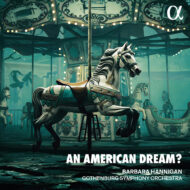
Barbara Hannigan’s An American Dream? opens like a fairground at dusk — lights still glowing, colors a little faded, music carrying memories more than promises. Hannigan has said she once felt awe toward America, and now feels mostly nostalgia. You hear that shift immediately. It’s not commentary. It’s atmosphere. Hannigan, a Canadian soprano and conductor long admired for her curiosity and range, approaches this American program with both affection and distance.
As principal guest conductor of the Gothenburg Symphony Orchestra, Hannigan shapes this program from the inside out. Her admiration for the “creativity and tenacity” of American composers becomes the thread that ties Gershwin’s exuberance in the Porgy and Bess selections to Copland’s Stravinsky-like rhythms in his Dance Symphony. From there, the program turns toward the bittersweet Carousel Waltz and the circling reflections of At the Fair, arranged by Hannigan and Bill Elliott.
The Gershwin selections feel like postcards from another era: bold colors, bustling activity, and a kind of optimism that now sounds remembered rather than lived. The Dance Symphony keeps the motion going — rhythms that once pushed forward now echoing back. A small but telling detail: both Gershwin and Copland were sons of immigrants. By the time we reach the At the Fair suite with Hannigan’s vocals, the fairground becomes a metaphor — innocence, spectacle, and longing.
She ends the program with Don’t Rain On My Parade — not as a wink, but as a stance. After all the circling memories, here is a burst of unfiltered confidence. It’s not sentimental. It’s not wistful. She doesn’t tell us what America is; she shows us what it feels like to remember it.
The orchestra plays beautifully, and Hannigan’s voice rises straight from the podium — not added later, not spotlighted, but woven into the ensemble like a memory surfacing in real time. And as a conductor, she makes the Gershwin and Copland pieces glow.
You may also be interested in: