Written by Jake Purches, Base2 Music Owner/Operator/Engineer and musician.
This year marks the tenth anniversary of Base2 Music, and it seems especially appropriate to celebrate that milestone with NativeDSD, who have supported the label almost from the beginning. Throughout that time we have shared a common aim – to bring listeners as close as possible to the original musical performance through recordings of the highest possible quality.
Base2 Music grew naturally from Base2 Studio, where I had already spent many years working in photography, digital imaging, lenticular printing and audio production. Looking back, however, its origins stretch much further back. In 1989 I joined Bowers & Wilkins, where I first met loudspeaker designer Laurence Dickie, later to become the inventor of the Nautilus loudspeaker and founder of Vivid Audio. We shared a fascination with accurate sound reproduction, and our discussions about loudspeaker design and recording remained with me long after I left the company.
A few years later, following the launch of the Nautilus loudspeaker, Bowers & Wilkins owner Robert Trunz established the B&W Music label. Seeing an independent audiophile record company develop from the inside gave me a valuable insight into how such a label could operate. Although I had no idea at the time, the seed for Base2 Music had already been planted.
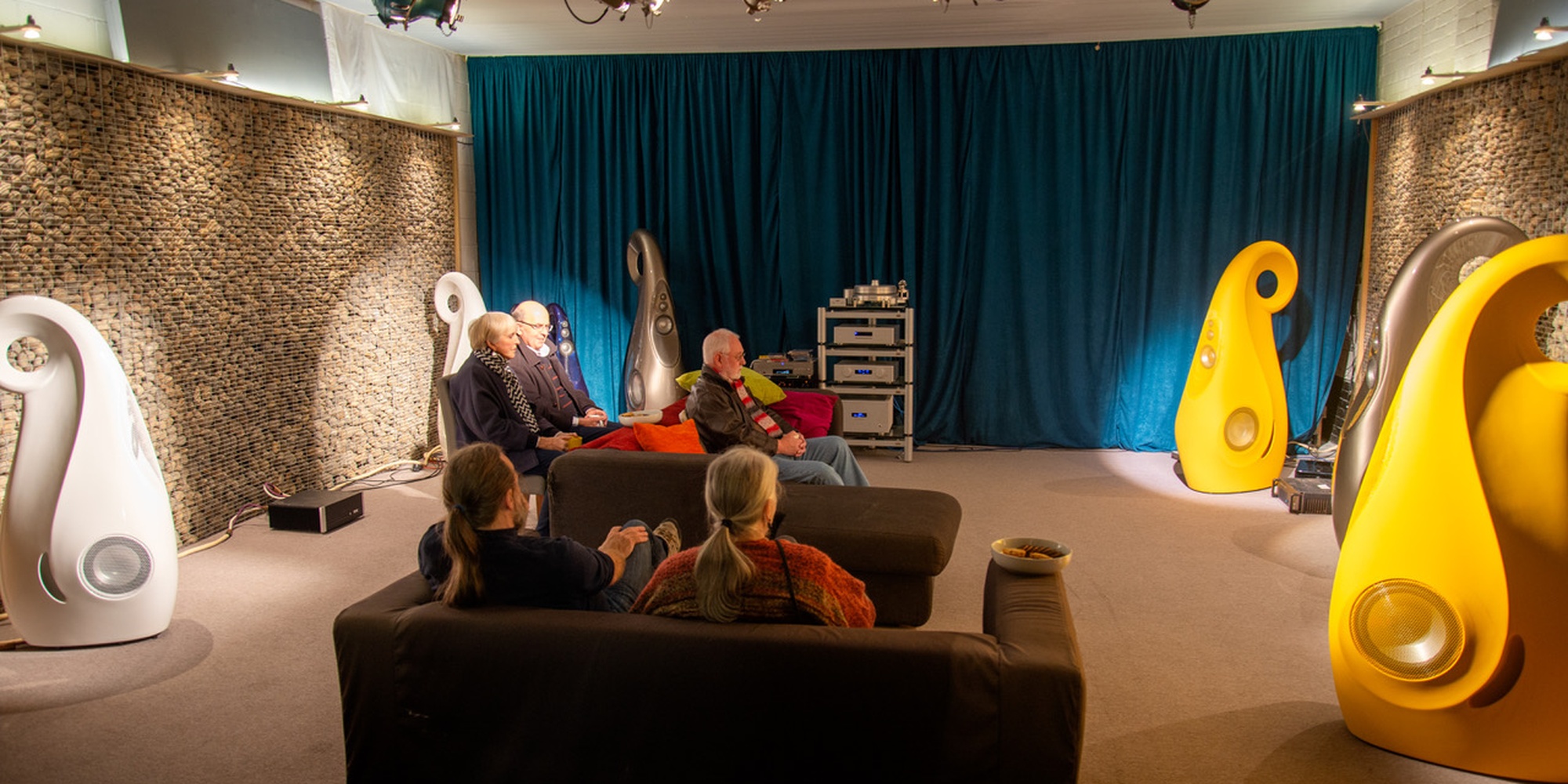
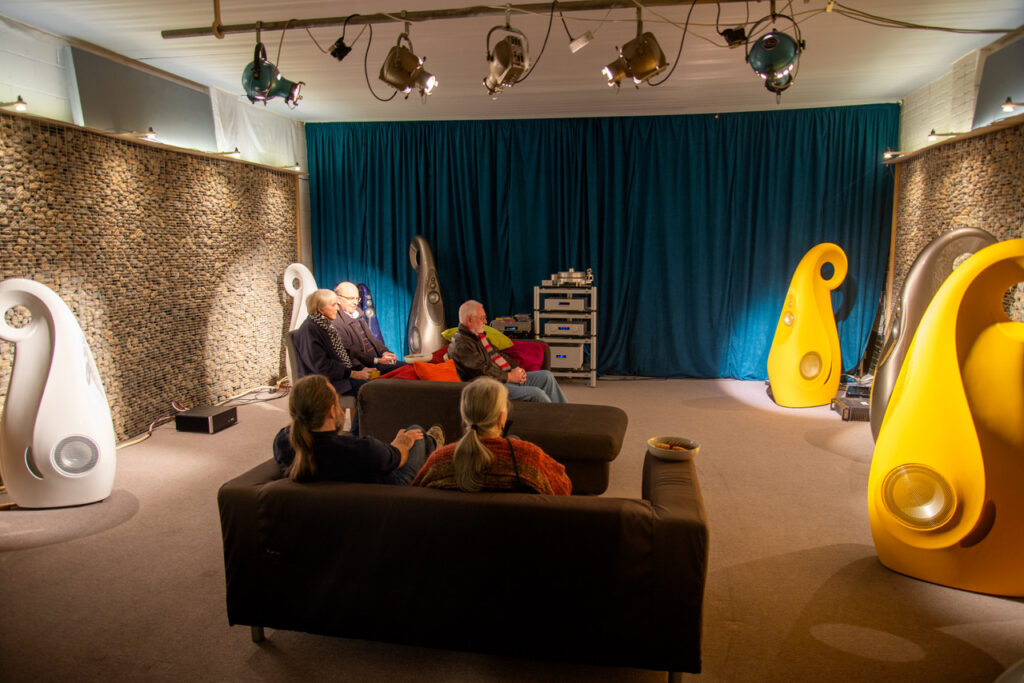
In 1998 I established Base2 Studio and spent the next decade refining both the technical and creative approach that would eventually become the foundation of the record label. Years later my path crossed once again with Laurence Dickie when he founded Vivid Audio. Today we share the same studio building, and I use Vivid Audio loudspeakers throughout my studio. They remain an essential part of every recording I produce.
The pipe organ gradually became the natural focus, although my fascination with the instrument began much earlier. As a child, hearing the great organ at Southwark Cathedral left a lasting impression that never faded. Over the following years I sought out organ recitals whenever I could, becoming a regular visitor to the BBC Proms, where the Royal Albert Hall organ was always a particular attraction. I heard many of the world’s finest organists, including Wayne Marshall long before we ever worked together. Looking back, it now seems almost inevitable that the organ would become the heart of Base2 Music.
After test recordings gave me the confidence to develop the label further, one person changed everything. The late Jean-Paul Imbert, the distinguished French organist, composer and teacher, not only became a trusted friend but also opened the door to many of Europe’s finest organs and introduced me to an extraordinary circle of musicians.
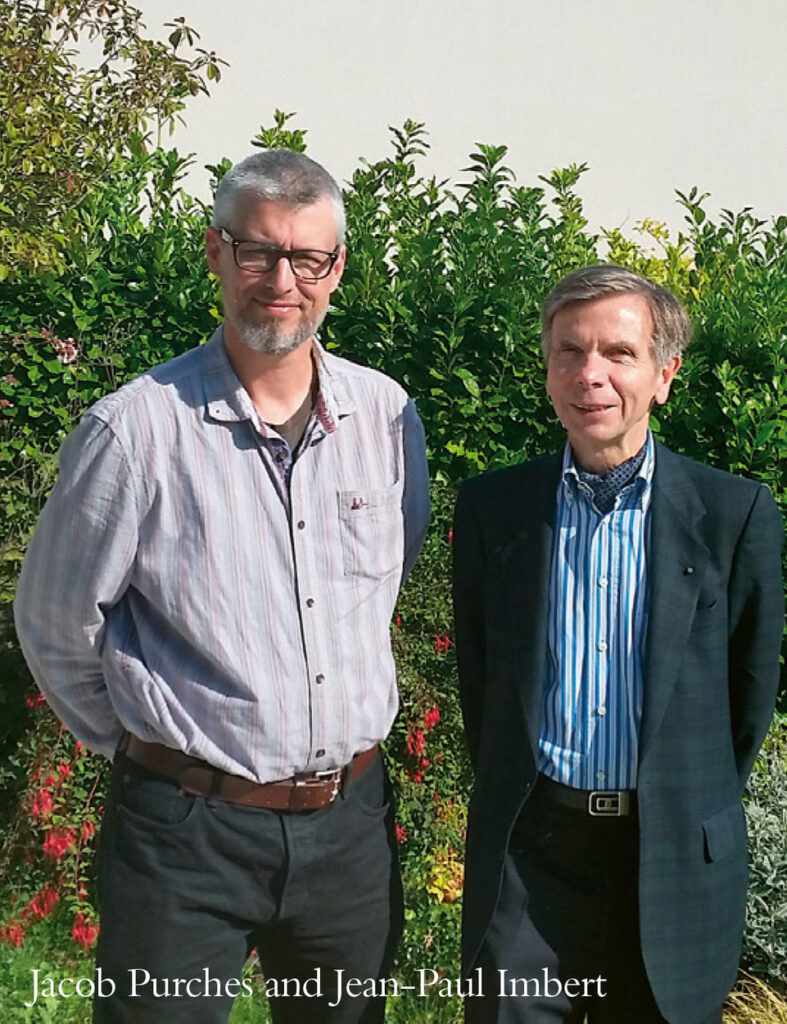
Under Jean-Paul’s guidance I also returned to music in a much more personal way. Although I had studied music earlier in life, I gradually abandoned it as my career moved in other directions. Yet my fascination with the organ never disappeared. It was only in my fifties that I returned to studying music seriously, and under Jean-Paul’s tuition I learnt to play the organ for the first time. His encouragement gave me the confidence to compose, and since then three of my works – Voyage, Organ Fantasy and Infinite – have appeared on Base2 Music releases. Becoming both an organist and composer has fundamentally changed the way I approach recording, giving me a deeper understanding of the musical and technical challenges faced by the artists with whom I work.
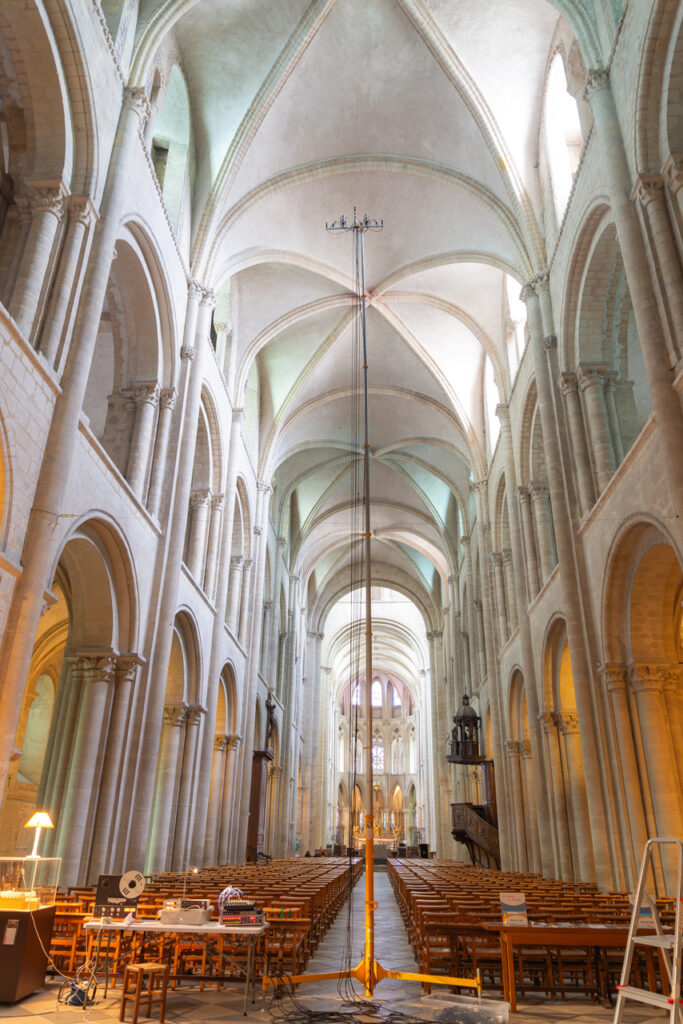
Jean-Paul’s encouragement also led to a significant investment in extended-bandwidth Sennheiser MKH microphones, with a published frequency response of 10 Hz to 60 kHz, together with tall pneumatic microphone masts that allow precise placement high within churches and cathedrals.
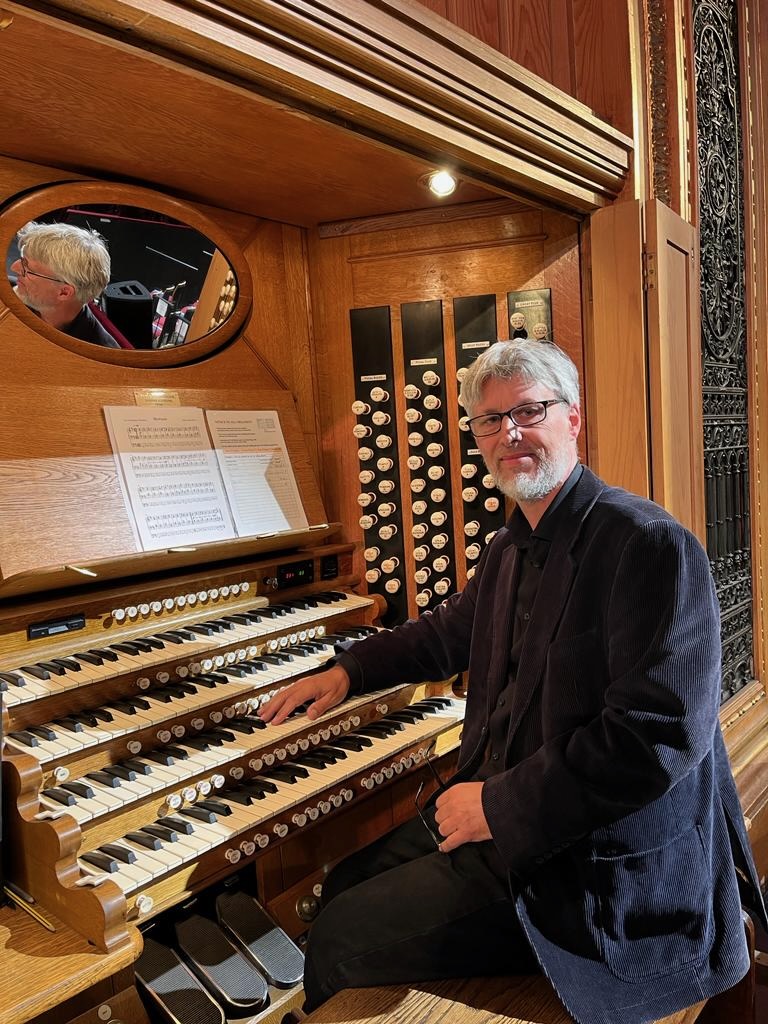
My commitment to ultra high-definition recording has never been about chasing impressive specifications. It is about preserving as much of the original performance as possible. Time and again I have found that, as bandwidth and resolution are reduced, some of the realism of the acoustic is lost. Whatever the underlying reasons, high-resolution recording consistently produces a more natural and convincing result.
Those microphones have occasionally revealed unexpected surprises. While recording Voyage on the magnificent Cavaillé-Coll organ of the Abbey of Saint-Ouen in Rouen, they captured the ultrasonic calls of bats living high within the abbey roof. As a bonus track on the album I slowed the recordings into the audible range, allowing listeners to hear sounds that would otherwise remain beyond human hearing.
Producing recordings to this standard also required learning entirely new disciplines. Creating hybrid SACDs introduced me to a remarkable community of engineers and specialists whose generosity made it possible for Base2 Music to achieve the standards I had always hoped for. I owe a particular debt to the late Yoshihisa Mori of Sony and the late Tim de Paravicini, both of whom gave their time freely, offering advice and encouragement until only days before they passed away.
Our first major SACD release, featuring the music of César Franck recorded on the Cavaillé-Coll organ at Saint-Étienne, Caen, confirmed that we were on the right path. It was followed by albums including Passacaglia, Jean-Baptiste Monnot’s Voyage, David Briggs’ Cochereau Centenary and three recordings with Wayne Marshall, culminating in The Breton Rhapsodies.
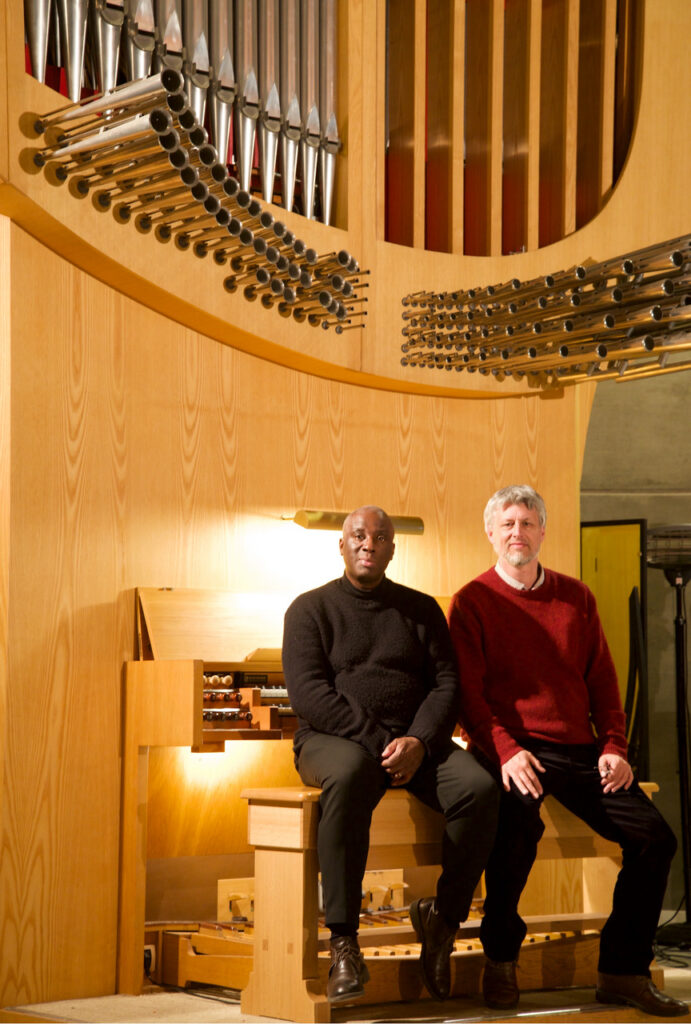
The same attention to detail extends beyond the recordings themselves. Every Base2 Music release is accompanied by detailed programme notes, original photography and carefully designed artwork. Listeners who purchase our hybrid SACDs receive beautifully printed booklets, while NativeDSD customers receive the same material as fully illustrated PDF booklets. I have always believed that presentation should reflect the same care and respect as the recording itself.
Looking back, I realise that Base2 Music has never been the work of one person. It has been shaped by the generosity, encouragement and friendship of remarkable musicians, engineers and colleagues who willingly shared their knowledge and experience. I owe a particular debt of gratitude to Jean-Paul Imbert, Robert Trunz, Laurence Dickie, Tim de Paravicini, Yoshihisa Mori, Gus Skinas, Andreas Koch, Bastiaan Kuijt and Christoph Martin Frommen, whose expertise has helped shape the recordings we make today.
Finally, my sincere thanks go to Jared and Jonas Sacks, and everyone at NativeDSD, for supporting Base2 Music throughout much of this journey, and to the many listeners around the world who continue to value music reproduced with care, integrity and respect for the original performance.
Although Base2 Music celebrates its tenth anniversary this year, I realise the journey began many decades earlier. It started with the sound of an organ in Southwark Cathedral, continued through a lifetime of listening, learning and meeting extraordinary people, and eventually found its expression in the recordings we make today. I hope that journey will continue for many years to come.